

Digital load cell maintenance records
Storing Scale Parameters for Truck Scale Maintenance with Digital Load Cells
A truck scale is not only a mechanical platform. It is a weighing system made of load cells, indicators, communication settings, calibration data, corner adjustment coefficients and service history.
When a scale has corner deviation, unstable weight, load cell replacement or indicator replacement, stored parameters help technicians restore the system faster and diagnose errors with clearer evidence.
With digital load cells, values such as ISN, load cell address, RS485/CAN communication, corner coefficient and calibration data become the technical memory of the truck scale.
Digital Load Cells
Maintenance
ISN Diagnosis
1. Why stored scale parameters matter
A truck scale does not stay exactly the same after installation. Foundation settlement, mechanical impact, moisture, lightning, cable aging, indicator setting changes and load cell replacement can all affect weighing performance.
Without a parameter history, each maintenance visit becomes harder because the technician cannot compare the current setup with the original condition. With a proper record, the service team can see what changed, when it changed and whether the change is normal or suspicious.
| Stored data | Why it matters |
|---|---|
| Load cell model and capacity | Confirms whether the installed load cells match the scale capacity and application. |
| Serial number / ISN | Identifies each digital load cell and prevents confusion during replacement. |
| Digital address | Maps each load cell to its real position on the weighbridge. |
| Corner coefficient | Shows how much correction was applied to each support point. |
| Calibration parameters | Supports recovery when an indicator is replaced or settings are lost. |
2. Digital load cells make maintenance more traceable
With analog load cells, technicians usually work with mV/V signals, junction box trimming and corner testing. With digital load cell technology, each load cell can have its own address, identification value, diagnostic data and correction coefficient.
This gives maintenance teams a major advantage: they can inspect each sensor position individually instead of looking only at the total output of the scale platform.
| Digital load cell value | Maintenance benefit |
|---|---|
| Individual address | Technicians can locate LC #1, LC #2, LC #3 and so on by real position. |
| ISN / internal identification | Helps confirm whether a load cell has been replaced or assigned incorrectly. |
| RS485 / CAN communication | Allows data transfer between the load cells, indicator and diagnostic system. |
| Corner adjustment data | Makes corner deviation easier to compare between service visits. |
3. What should be stored before and after service?
Before replacing a load cell, adjusting corners or recalibrating a truck scale, the current condition should be recorded. The simplest method is to take photos of indicator screens, save the parameter table in a service file and name the file by maintenance date.
For important truck scales, KALA recommends storing both before-service and after-service records.
| Parameter group | Examples to store | Use during maintenance |
|---|---|---|
| Scale configuration | Capacity, division, number of modules, number of load cells | Confirms whether the system setup matches the actual weighbridge. |
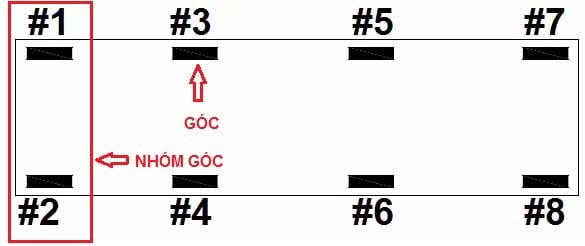
| Load cell map | LC #1 to LC #8, physical position, ISN, address | Prevents wrong corner adjustment and wrong load cell replacement. |
| Communication | RS485/CAN, baud rate, A/B wiring, power supply | Helps diagnose communication loss or unstable digital signals. |
| Calibration | Zero, span, division, linearity and calibration rate | Supports recovery after indicator replacement or parameter loss. |
| Test results | Corner test, test truck, repeatability and before/after values | Shows whether the service work actually improved the scale. |
4. Example from an MK Di01 parameter record
In a practical maintenance file for an MK Di01 indicator using MK-LUD C Type digital load cells, the stored data included RS485 wiring, baud rate, ISN values, load cell addresses, corner coefficients, load cell replacement history and calibration parameters.
This type of service file is valuable because it documents the real technical condition of the scale, not only the final weighing result.
| Record item | Example value | Technical meaning |
|---|---|---|
| Digital wiring | +12V, GND, Signal B (+485), Signal A (-485) | Useful when checking wiring errors or reversed communication polarity. |
| Baud rate | Bt 9600 | Confirms communication compatibility between indicator and load cells. |
| ISN | ISN values for LC #1 to LC #8 | Identifies each digital load cell during troubleshooting. |
| Corner coefficient | 1.00000, 0.99950, 1.00140… | Shows how much correction is applied to each corner. |
| Calibration data | A, L, LH, b, o, oH | Can help restore settings when an indicator is replaced. |
5. Corner adjustment on DS1 / DS1M indicators
For digital indicators such as XK3190-DS1 or XK3190-DS1M, corner correction can be entered manually or adjusted through the indicator procedure. The article Corner Adjustment on XK3190-DS1 / XK3190-DS1M Indicators is a useful technical reference because every corner adjustment should be stored by date, load cell position and final test result.
6. Connecting parameter records with ISN diagnosis
When a truck scale has weight errors, one of the most important steps is to check corner deviation and identify whether a specific load cell is abnormal. The article Truck Scale Weight Errors and Corner Adjustment with ISN Diagnosis explains how ISN values, corner testing and digital load cell data can support error diagnosis.
If ISN and address records already exist, troubleshooting becomes much clearer. For example, if LC #6 had stable corner coefficients for several years but suddenly requires a large correction, or if its ISN no longer matches the old record, the technician can suspect wrong load cell replacement, wrong address assignment, wiring problems or a mechanical issue at that position.
| Symptom | Possible meaning | Record to check |
|---|---|---|
| ISN does not match old record | Load cell may have been replaced or assigned incorrectly. | ISN history and service notes. |
| Corner coefficient changes too much | Mechanical issue, load transfer problem or damaged sensor. | Previous corner coefficient table. |
| Communication loss | Wrong address, wiring fault, baud rate mismatch or power issue. | RS485/CAN settings and wiring diagram. |
| Scale correct at one load but wrong at another | Linearity issue or poor calibration coverage. | Calibration and test load history. |
7. Recommended parameter storage workflow
The workflow below helps maintenance teams keep truck scale service records consistent. It is useful for factories, mines, logistics yards, ports, raw material warehouses and high-traffic weighing stations.
| Step | Action | Record to store |
|---|---|---|
| 1 | Record the condition before service | Indicator photos, displayed errors, corner deviation and cable/load cell condition. |
| 2 | Read and verify digital load cells | ISN, address and physical position of LC #1 to LC #8. |
| 3 | Check communication | RS485/CAN, baud rate, A/B polarity and connection errors. |
| 4 | Adjust corners and calibrate | Corner coefficients, zero, span and test load result. |
| 5 | Finalize the service file | Parameter file, service date, technician name and follow-up notes. |
8. Related technical references
| Reference | Why it is useful |
|---|---|
| Digital Load Cell Installation | Explains digital load cell wiring, setup and communication considerations. |
| DS1M with BTA-D / VLC-121D Load Cells | Shows address setting, load cell grouping, corner adjustment and calibration steps. |
| KALA DS8 and KDB-D 30tf Load Cells | Reference for digital indicator and digital load cell truck scale configuration. |
| Curiotec Digital Load Cells with ISN Diagnostics | Useful for understanding digital load cell diagnosis with RS485/CAN and ISN values. |
9. Conclusion
Storing scale parameters is not paperwork after service. It is part of modern truck scale maintenance. With digital load cells, values such as ISN, address, corner coefficient, baud rate and calibration data become the technical health record of the weighing system.
When these records are stored correctly, load cell replacement, indicator replacement, corner adjustment, weighing error checking and system recovery become faster, clearer and less risky. This is the foundation for KALA to support truck scale maintenance with better accuracy, stronger traceability and long-term service reliability.
Talk to KALA
KALA supports truck scale parameter review, digital load cell diagnosis, ISN checking, corner adjustment, calibration record building and long-term maintenance planning for factories, mines, ports, logistics yards and high-traffic weighing stations.
Genuine Products, Reliable Technical Support